

The Ontario Court of Appeal has released its decision in Diep v. Mac’s Convenience Stores Inc., a case that sits at the intersection of automobile insurance and occupiers’ liability law.
The plaintiff successfully established entitlement to statutory accident benefits after slipping while attempting to re-enter his vehicle. He then sued the occupier and snow-removal contractor responsible for maintaining the parking lot.
The resulting appeal required the Court to consider whether occupiers and contractors can benefit from statutory protections normally associated with Ontario’s automobile insurance regime. Specifically, could they deduct SABS under section 267.8 of the Insurance Act and defeat OHIP’s subrogated claim under section 30(5) of the Health Insurance Act?
The Court of Appeal concluded that the defendants could not rely on either provision. In doing so, it drew an important distinction between entitlement to SABS and the characterization of a subsequent tort claim.
Diep v. Mac’s Convenience Stores: Facts and Background
The Slip-and-Fall Accident
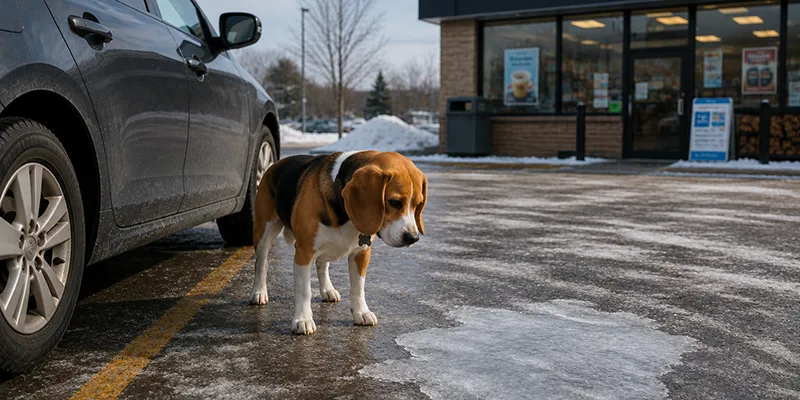
The plaintiff parked his vehicle in a convenience store parking lot in Markham. After purchasing lottery tickets, he returned to his vehicle. He unlocked it using his key fob and, while reaching for the door handle to get back inside, slipped on snow or ice and suffered serious injuries.
The SABS Claim and Occupiers’ Liability Action
The plaintiff applied for SABS through his automobile insurer. Although the insurer initially denied the claim, the Licence Appeal Tribunal ultimately found that the incident qualified as an “accident” under the Statutory Accident Benefits Schedule because the use or operation of an automobile directly caused the impairment. The plaintiff was therefore entitled to SABS.
The plaintiff later commenced an action against the owner of the premises and the snow-removal contractor, alleging negligence and breaches of the Occupiers’ Liability Act. OHIP also advanced its usual subrogated claim.
Why the Defendants Sought SABS Deductions and Dismissal of OHIP’s Claim
The defendants argued that because the plaintiff had already been found entitled to SABS, any tort damages awarded against them should be reduced under section 267.8 of the Insurance Act.
They also argued that OHIP’s subrogated claim was barred by section 30(5) of the Health Insurance Act.
On a practical level, these arguments had some appeal. The LAT had already determined that the incident qualified as an “accident” for SABS purposes because the use or operation of an automobile directly caused the impairment. If the incident qualified as an automobile accident for SABS purposes, why should the defendants not receive the benefit of the statutory deduction provisions designed to prevent double recovery?
The Court of Appeal rejected that reasoning.
SABS Entitlement vs. Insurance Act Deductions
Different Legal Questions
A central theme running through the decision is that the issue before the LAT was not the same issue before the Court.
The LAT was deciding whether the plaintiff was entitled to SABS. That question is determined under the statutory definition of “accident” in the SABS Schedule and is interpreted broadly and generously in light of the remedial nature of the legislation.
The Court, however, was dealing with a different question: whether the plaintiff’s tort action against the occupier and contractor was an action for loss or damage arising directly or indirectly from the use or operation of an automobile for the purposes of section 267.8 of the Insurance Act and section 30(5) of the Health Insurance Act.
The Importance of the True Nature of the Claim
The motion judge characterized the claim as, in substance, a snow-and-ice maintenance case. The Court of Appeal agreed.
The Court accepted that the dominant cause alleged in the pleadings was the defendants’ failure to remove snow and ice from the parking lot. The claim was framed as an occupiers’ liability and negligence action. The vehicle’s presence was merely incidental to that claim.
As a result, the Court concluded that the action could not properly be characterized as arising from the use or operation of an automobile, even though the plaintiff had successfully established entitlement to SABS.
Why Section 267.8 Did Not Allow the Occupiers to Deduct SABS
The Court’s Interpretation of Section 267.8
The defendants argued that section 267.8 exists to prevent double recovery and that permitting the plaintiff to recover damages without deducting SABS undermined that objective.
The Court of Appeal acknowledged the anti-double-recovery purpose of section 267.8. However, the Court emphasized that the provision only applies where the action itself falls within the statutory language.
In the Court’s view, this action did not.
The Court accepted that section 267.8 restricts a plaintiff’s ability to recover the full amount of his or her damages and therefore should not be interpreted more broadly than necessary. Because the action was fundamentally an occupiers’ liability claim rather than an automobile negligence claim, the statutory deduction mechanism was not engaged.
Are These Provisions Intended for Unprotected Defendants?
Although the Court of Appeal did not expressly decide the case on this basis, the decision raises an interesting policy question.
The statutory deduction and threshold regime in sections 267.4 to 267.12 of the Insurance Act is primarily associated with “protected defendants” under Ontario’s automobile insurance system. The defendants in Diep were not being sued as owners, operators, or motorists. They were being sued as occupiers and a snow-removal contractor.
Viewed through that lens, the defendants were effectively seeking the benefit of provisions that form part of the automobile insurance tort regime, even though the claim being advanced against them was fundamentally an occupiers’ liability claim.
To be clear, the Court of Appeal did not decide the case on that basis. Nevertheless, the decision raises an interesting question about the extent to which defendants sued in their capacity as occupiers or contractors can invoke statutory protections that were primarily designed for automobile litigation.
Why OHIP’s Subrogated Claim Survived
The Relationship Between Section 267.8 and Section 30(5)
The same reasoning largely determined the outcome of the OHIP issue. Section 30(5) of the Health Insurance Act bars OHIP’s subrogated claim in certain automobile-related cases. The defendants argued that the provision should apply because the plaintiff’s injuries had already been found to arise from the use or operation of an automobile. They relied heavily on Ontario (Ministry of Health and Long-Term Care) v. Georgiou, arguing that once the plaintiff had established entitlement to SABS, the statutory protections should follow.
The Court of Appeal disagreed. It distinguished Georgiou on the basis that the characterization issue was not in dispute in that case. In Diep, by contrast, the central question was whether the occupiers’ liability action itself could properly be characterized as arising directly or indirectly from the use or operation of an automobile.
Why the Court Allowed OHIP’s Claim to Proceed
Having concluded that the action itself was not properly characterized as arising directly or indirectly from the use or operation of an automobile, the Court held that the statutory bar in section 30(5) did not apply. OHIP’s subrogated claim therefore remained available.
Key Takeaways for Insurers, Occupiers, and Defence Counsel
Diep does not change the test for SABS entitlement. Nor does it change the principle that section 267.8 is intended to prevent double recovery.
What the decision does confirm is that a successful LAT finding on SABS entitlement does not automatically determine the application of section 267.8 of the Insurance Act or section 30(5) of the Health Insurance Act in subsequent tort litigation.
The characterization of the tort claim still matters.
Where a plaintiff advances a conventional occupiers’ liability claim and the alleged wrongdoing relates to the maintenance of premises rather than the operation of a vehicle, courts may conclude that the action is not, in substance, an automobile claim even though the plaintiff was entitled to SABS arising from the same incident.
For occupiers, contractors, liability insurers, and automobile insurers, Diep is a reminder that a finding of SABS entitlement does not automatically determine the availability of Insurance Act deductions or the viability of OHIP’s subrogated claim. The characterization of the tort action remains critical.
See Diep v. Mac’s Convenience Stores Inc., 2026 ONCA 424